

The moment a patient transitions from a seated position to standing is one of the most vulnerable points in any care routine. It is a movement that requires coordination, strength, and trust. For individuals recovering from surgery, living with progressive muscle weakness, or navigating the challenges of aging, this simple act can become a daily struggle. The electric sit to stand lift has emerged as a pivotal solution, bridging the gap between complete dependency and active participation in one’s own transfer. Unlike traditional ceiling lifts or full-body slings that immobilize the patient, this device is designed specifically for individuals who retain some degree of lower body strength and weight-bearing capacity. It empowers them to engage their muscles during the transfer, promoting circulation, maintaining bone density, and preserving a sense of autonomy. For caregivers, the electric mechanism eliminates the manual effort of cranking or pumping a hydraulic lever, reducing the physical toll and minimizing the risk of musculoskeletal injuries. This article explores how this technology works, why the electric motor matters, and how real-world care environments are leveraging these devices to improve outcomes for both patients and staff.
Understanding the Mechanics and Clinical Purpose of an Electric Sit to Stand Lift
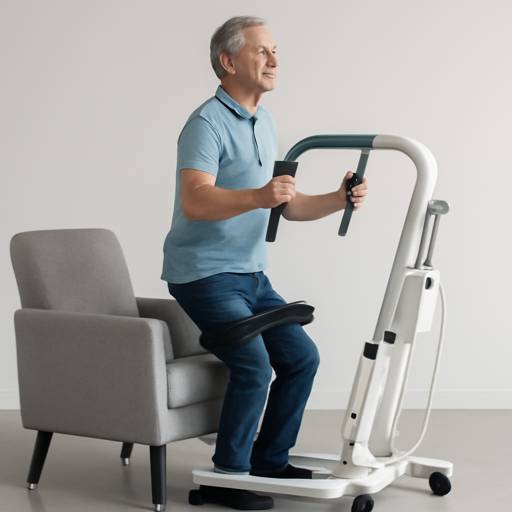
At its core, a sit to stand lift is engineered to assist a patient who can bear some weight and maintain a stable trunk. The patient begins in a seated position on a bed, chair, or wheelchair. The device is positioned in front of them, with a padded knee pad placed against their shins to prevent sliding forward. A low-profile footplate supports the feet, ensuring proper alignment and stability. The key difference between a manual and an electric model lies in the lifting mechanism. With an electric unit, a rechargeable battery powers a linear actuator that smoothly raises the lifting boom. This boom is connected to a vest-style or full-back sling that wraps around the patient’s torso and under the arms. As the motor engages, the patient is gently pulled forward and upward into a standing position. The critical clinical distinction here is that the patient actively participates. Their legs extend, their core engages, and they stand with the lift providing stability and counterbalance rather than carrying their full weight.
This concept of partial weight-bearing is essential for rehabilitation. Physical therapists often prescribe sit to stand transfers to rebuild strength in the quadriceps and glutes after a hip replacement or stroke. By using an electric lift, the patient can perform more repetitions without exhausting the caregiver or creating unsafe leverage scenarios. The lift also supports a safe pivot transfer. Once the patient is standing, the caregiver can rotate the unit slightly to align the patient with a toilet, bed, or wheelchair before lowering them back down. The slow, controlled descent of the electric motor is far gentler than a free-fall or sudden release, which can cause fear and spasms in patients with neurological conditions. Furthermore, the design of the knee pad and footplate ensures that the patient’s weight is distributed correctly, preventing shearing forces on the skin. This is particularly important for frail elderly individuals whose skin is susceptible to tears. For the caregiver, the electric actuator means no repetitive strain from manual pumping. Instead, a simple push of a button on the hand control initiates the lift. This seemingly small feature dramatically extends the working life of a caregiver’s back and shoulders, directly addressing the high rates of injury in the healthcare industry.
Why the Electric Motor Matters: Precision, Safety, and User Experience
The transition from a manual hydraulic system to an electric actuator represents a paradigm shift in patient handling. The most immediate benefit is effortless operation. A manual lift requires the caregiver to repeatedly pump a handle, which, over the course of a single shift, can accumulate to hundreds of strenuous arm and back movements. An electric lift eliminates this entirely. The caregiver simply positions the vest, places the footplate, and presses the up button. The lift rises at a consistent, pre-programmed speed, which is inherently safer than the often jerky or uneven motion of manual pumping. This controlled ascent is crucial for patients who experience pain or anxiety during transfers. A smooth, continuous rise feels predictable and secure, encouraging the patient to relax their muscles and cooperate with the movement. Many electric models also include an emergency stop button and a manual override hand crank in case of battery failure, providing a redundant layer of safety that pure manual systems cannot match. The battery itself is typically a sealed lead-acid or lithium-ion unit that can handle a full day of transfers on a single charge, with a battery gauge letting the staff know when a recharge is due.
Another significant advantage is the ergonomic footplate and knee pad integration that is often more refined on electric models. Because the manufacturer can invest in a powered actuator, they can also design a more compact and portable base. The legs of an electric lift can be opened and closed with a separate electrical or mechanical foot pedal system, allowing the caregiver to maneuver around bed legs and chair bases with greater ease. This is where the patient’s experience directly improves. A lift that can be positioned exactly where it needs to be, without the caregiver straining to widen or close the base, means less repositioning and fumbling. For the patient, this translates to a shorter, less stressful transfer process. For caregivers evaluating options, a high-quality electric sit to stand lift provides that precise control needed for patients who are anxious or have limited communication abilities. The caregiver can pause the lift at any point to adjust the sling or check the patient’s comfort, then resume the motion seamlessly. This level of control is impossible with a manual pump, where every pause requires a release of pressure and a restart of the pumping cycle. The electric motor also tends to be quieter than the mechanical clanking of a hydraulic pump, which reduces noise in a quiet hospital ward or home environment, contributing to a calmer atmosphere for recovery.
Case Studies in Application: Home Care and Skilled Nursing Facilities
In a skilled nursing facility in Ohio, the staff reported a 40% reduction in staff injuries within six months of switching from manual sit to stand lifts to electric models. The primary driver was the elimination of the repetitive pumping motion, which had been a leading cause of shoulder and back strains among nursing assistants. The facility also noted that patient refusal rates for transfers decreased dramatically. Residents who were previously fearful of the jerky motion of the manual lift became more willing to participate when they experienced the smooth, steady rise of the electric actuator. One case involved a 78-year-old woman with advanced osteoarthritis who required two staff members for a manual lift due to her fear of falling. After transitioning to an electric sit to stand lift, she could be safely transferred by a single caregiver. The soft-start feature of the electric motor allowed the lift to begin moving at a barely perceptible pace, giving her brain time to adjust to the sensation of movement. Within two weeks, she regained enough confidence to bear more weight through her legs, and her physical therapy team noted improved gait initiation during standing transfers.
Another compelling example comes from a home healthcare scenario. A 62-year-old man with multiple sclerosis was losing the ability to stand from his recliner independently. His wife, his primary caregiver, was struggling with the manual effort required even with a basic sit to stand device. They rented an electric model from a local durable medical equipment supplier. The difference was immediate. The husband could initiate the lift himself using a hand pendant, preserving his sense of control and dignity. His wife no longer felt the strain in her lower back, which allowed her to provide care for longer hours without fatigue. The lift also facilitated toileting transfers, which had previously been the most challenging and risky part of their day. The knee pad and footplate design prevented him from sliding forward, a common issue with manual devices when the caregiver fatigues and cannot maintain a consistent pumping rhythm. The battery life of the electric lift easily lasted through three transfers per day for a full week, and the LED indicator light gave the wife confidence that the lift would not die mid-transfer. These real-world examples highlight that the electric sit to stand lift is not just a piece of equipment; it is a tool that restores functional movement, protects the caregiver’s body, and fundamentally changes the dynamic of care from one of struggle to one of supported independence.