

Mobility limitations can transform simple daily tasks into significant challenges. For individuals who retain some lower body strength but struggle with balance or endurance, the act of standing from a seated position presents a critical obstacle. Caregivers, family members, and healthcare facilities constantly search for solutions that preserve dignity while minimizing physical risk. The sit to stand lift has emerged as an essential tool in these scenarios, bridging the gap between full dependency and independent movement. Unlike full-body sling lifts, these devices are designed specifically for patients who can bear weight on their legs and participate actively in the transfer process. The market offers numerous options, and understanding what differentiates a quality unit is crucial for making an informed purchase. Choosing the right equipment can drastically improve quality of life, reduce injury rates among staff, and streamline daily care routines. Whether for home use or a professional medical setting, the investment in a sit to stand lift for sale requires careful evaluation of features, safety mechanisms, and compatibility with the user's specific needs. The following sections will explore the practical applications, technical specifications, and real-world considerations that define this category of patient handling equipment.
Understanding the Mechanics and Application of Sit to Stand Lifts
A sit to stand lift operates on a fundamentally different principle than a standard patient lift. The core mechanism relies on a pivoting motion that assists the user from a seated position to a stable standing posture. The device typically includes a knee pad that blocks the knees from moving forward, a base that slides under the bed or chair, and a set of handles or a sling that supports the patient's back and torso. As the lift arm rises, the patient’s natural momentum is guided upward, encouraging them to bear weight through their legs. This active participation is critical because it helps maintain muscle tone, improves circulation, and supports overall physical rehabilitation. For caregivers, the mechanical advantage provided by the lift transforms a potentially dangerous manual transfer into a controlled, low-effort process.
The clinical applications for these lifts are broad but specific. They are most effective for patients recovering from hip or knee replacement surgery, individuals with Parkinson's disease who experience freezing episodes, and those with general deconditioning from prolonged bed rest. The key criterion is the patient's ability to cooperate and maintain some weight-bearing capacity. Safety features such as emergency stop buttons, wide wheelbases for stability, and adjustable leg openings are non-negotiable. The base of the lift must be able to fit around standard commodes, wheelchairs, and armchairs without interference. Battery life is another practical consideration; a lift that runs out of power mid-transfer creates a hazardous situation. Modern units often feature intuitive digital controls that allow both the patient and the caregiver to operate the lift, fostering a sense of independence. The sling design has also evolved, with some models offering breathable mesh materials and quick-release mechanisms for easy attachment and removal. Understanding these mechanical details helps buyers differentiate between a basic model and a fully featured device suitable for long-term, frequent use.
When evaluating a unit, scrutinize the weight capacity and the range of motion. Some lifts only facilitate a partial stand, while others bring the user to a fully upright position. The height adjustment range must match the furniture in the intended environment. A lift that works perfectly in a hospital room might struggle to fit under a low-profile home recliner. The flooring also matters: carpeted rooms require larger casters, while hard surfaces demand non-marking wheels with reliable braking systems. Troubleshooting common issues, such as the lift struggling to initiate the movement or the patient sliding forward, often points to incorrect sling sizing or improper positioning of the knee pads. These are not design flaws but rather setup errors that can be corrected with proper training. For institutions, standardized training protocols for all staff members are essential to maximize safety and equipment lifespan.
Key Features and Decision Factors for Purchasing
Selecting the correct model from the many options available requires a structured approach centered on the patient's specific condition and the care environment. The first decision point involves the chassis design. Mobile floor lifts offer the most flexibility, moving freely between rooms, but they require ample storage space. Fixed track systems or overhead lifts are an alternative for facilities where transfers always occur in the same location. For most home care situations, a sturdy, mobile floor lift is the standard recommendation. The footprint of the base is a critical specification. A wide base provides superior stability during the lifting arc, but it may not fit through narrow doorways or between furniture. Some manufacturers address this with expandable bases that widen during lift and narrow during storage. The lower profile of the base determines how easily it slides under beds and chairs. A thin design with tapered toes reduces the need to lift the patient’s legs manually before starting the transfer.
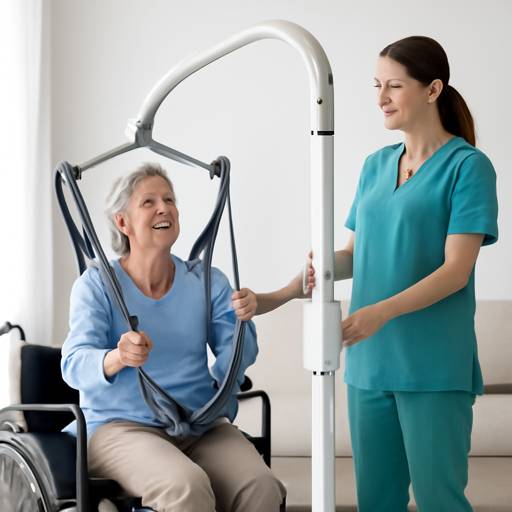
The lifting mechanism itself is another major differentiator. Electric actuators provide smooth, consistent power and are the standard in most modern devices. They are quiet, require minimal maintenance, and allow for precise positioning. Hydraulic systems are less common now but still found in older or budget models; they can be slower and may drift over time if seals wear out. Battery technology also demands attention. Sealed lead-acid batteries are cost-effective but heavier and require more frequent replacement. Lithium-ion batteries are lighter, charge faster, and hold their capacity longer, making them ideal for heavy daily use. The charging system should be convenient, with a wall-mounted or onboard charger that prevents overcharging. Control interface design directly impacts usability. Simple up/down buttons are intuitive for patients with cognitive limitations, while more advanced models offer programmable height limits and slow-start features to minimize startling the patient. Sling compatibility cannot be overlooked. A universal sling system that accepts slings from multiple manufacturers provides flexibility, but proprietary systems often offer a more secure fit. The material of the sling affects comfort and hygiene: padded slings are suitable for sensitive skin, while mesh slings dry faster after cleaning.
Cost analysis should extend beyond the initial purchase price. Factor in the lifespan of the lift, which can range from five to fifteen years depending on build quality and usage frequency. Warranty coverage for the frame, the motor, and the battery is a direct indicator of manufacturer confidence. A lift with a five-year warranty on the frame and a one-year warranty on the battery suggests better engineering than one with a single-year comprehensive warranty. Assess the availability of replacement parts and local service technicians. A lift is a lifeline; downtime waiting for a repair part can disrupt care plans severely. For institutional buyers, purchasing in bulk from a single supplier often yields volume discounts and standardized maintenance contracts. For individual buyers, consider the resale value of reputable brands. Finally, test the noise level. In a quiet home environment, a loud mechanical lift can be disruptive and feel clinical. A whisper-quiet operation contributes to a more dignified and calm transfer experience. The best purchase decision balances the patient's physical needs, the caregiver's capabilities, and the spatial constraints of the location.
Real-World Case Study: Implementation and Outcomes in a Skilled Nursing Facility
Consider the experience of Maplewood Heights, a 120-bed skilled nursing facility that transitioned from manual transfers to a fleet of sit to stand lifts. Prior to the change, the facility reported an average of fourteen staff injuries per year related to patient transfers, primarily back strains and shoulder injuries. Turnover among nursing assistants was high, with many citing physical demands as the primary reason for leaving. The facility administrators decided to invest in fifteen new sit to stand lifts and implement a mandatory competency-based training program for all clinical staff. The training covered not only how to operate the lift but also how to assess patient candidacy, select the appropriate sling size, and perform emergency disengagement techniques. The facility chose a model with lithium-ion batteries and expandable bases to accommodate their varied room layouts and narrow corridors.
The results over the subsequent twelve months were significant. Staff injuries related to patient handling dropped by over eighty percent, from fourteen incidents to just three minor ones. The facility’s workers’ compensation premiums decreased by twenty-two percent in the following renewal period. Patient outcomes also improved notably. Physical therapists reported that patients using the lifts were more willing to participate in therapy sessions because the transfers were no longer painful or anxiety-inducing. The facility saw a measurable decrease in the incidence of pressure injuries, likely because the lift enabled more frequent repositioning and transfers out of bed. Patient satisfaction scores on the annual survey improved in the category of "assistance with mobility," jumping from an average of three-point-five stars to four-point-seven stars out of five.
However, implementation was not without its challenges. During the first month, there was resistance from some senior staff members who were accustomed to manual techniques. This was overcome through peer mentoring and clear documentation showing reduced injury risk. The facility also learned that placement of the lifts was critical. Initially, lifts were stored in a central charging station, which led to delays as staff had to fetch them. The solution was to assign lifts to specific wings and install charging cradles in those areas, dramatically reducing retrieval time. Another lesson involved the sling inventory. The facility initially purchased only one size of sling per lift, but they quickly realized that a single size did not fit the diverse body types of their residents. They subsequently invested in a set of small, medium, and large slings per unit, along with a color-coded storage system. This case demonstrates that purchasing the equipment is only the first step. The environment, training protocols, and ongoing maintenance routines heavily influence the ultimate return on investment. The facility now uses a system where each lift is inspected daily, logged into a digital maintenance system, and serviced every six months. They also implemented a replacement schedule for slings every two years to ensure fabric integrity. For any buyer, this example underscores the importance of planning for the entire lifecycle of the lift, not just the point of sale.