

The daily challenge of moving a patient from a seated position to standing is one of the most physically demanding tasks in healthcare and home care. For individuals with partial mobility, relying solely on manual assistance often leads to injury for both the caregiver and the patient. While manual techniques have been used for decades, the evolution of patient handling equipment has brought a superior solution to the forefront: the electric sit to stand lift. This device is not merely a piece of machinery; it represents a fundamental shift in how we approach dignity, safety, and rehabilitation. Unlike full-body sling lifts that require complete passive transfer, this technology is designed for patients who possess some weight-bearing capacity and trunk control. By harnessing electric power for the lifting motion, it eliminates the awkward, jerky movements of manual braces. The result is a controlled, smooth, and predictable transition that mimics a natural standing motion. For facilities and families alike, understanding the mechanics and advantages of this tool is essential for modern care protocols.
The core functionality revolves around a padded knee brace that stabilizes the patient’s legs and a harness or sling that supports the torso. With the push of a button, the lift’s linear actuator gently raises the patient forward and upward into a standing position. This seated-to-standing arc is critical. It prevents the patient from being yanked upward by the armpits, a common mistake in manual transfers that can cause shoulder injuries or skin tears. Instead, the lift leverages the patient’s own existing strength. The electric motor provides the majority of the work, leaving the patient to focus on engaging their leg and core muscles. This makes the electric sit to stand lift an invaluable tool for physical therapy. It allows therapists to work on balance, leg strength, and gait training in a safe, supported environment. The patient is not just being moved; they are participating in their own recovery. This active involvement is clinically proven to improve outcomes compared to passive lifting methods. Furthermore, the electric mechanism ensures consistency. Each transfer is identical, reducing the risk of sudden errors caused by caregiver fatigue or distraction.
A significant feature that sets these lifts apart is their emphasis on biomechanical safety for the caregiver. Manual sit-to-stand transfers, even with two caregivers, place enormous stress on the lower back. Bending, twisting, and supporting partial weight repeatedly throughout a shift is a primary cause of musculoskeletal disorders in nurses and home health aides. By delegating the physical lifting force to an electric motor, the caregiver’s role shifts from a lifter to a guide. They simply position the base under the bed or chair, secure the patient, and operate the controls. This drastically reduces the compressive forces on the spine. Many modern units also feature powered leg-opening mechanisms, allowing the base to straddle a wheelchair or toilet without manual handle cranking. This level of automation not only saves time but also aligns with "no-lift" policies that are becoming standard in hospitals and long-term care facilities. The investment in this technology pays for itself through reduced worker compensation claims and lower staff turnover rates.
Key Ergonomic and Safety Features in Modern Electric Sit to Stand Lifts
When evaluating an electric sit to stand lift, the specific engineering details often distinguish a superior model from a basic one. The first critical component is the base design. A wider, longer base provides greater stability, which is paramount when transferring a patient who may be anxious or prone to sudden movements. Look for bases with locking casters that engage automatically when the lift is raised. This prevents the lift from rolling or tipping during the transfer cycle. Another vital safety element is the emergency stop function. All reputable electric models include a readily accessible red button that immediately halts all motor functions. Additionally, a manual backup system—usually a crank or hydraulic release—is mandatory. In the event of a power failure or battery depletion, the caregiver must be able to lower the patient safely to a seated position. The battery life itself is a major consideration. Lithium-ion batteries are now the industry standard, offering longer operating times and faster charging cycles compared to older lead-acid units. A lift that can handle 15–20 full transfers on a single charge is ideal for a busy ward.
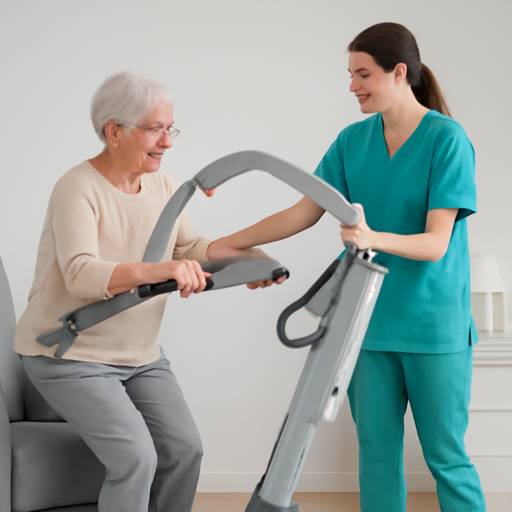
The sling or harness attachment system is another area of significant innovation. Earlier models often used awkward clips that were difficult to connect behind the patient’s back. Modern lifts utilize color-coded loops and quick-release buckles that can be attached from the front while the patient is seated. This eliminates the need to reach around or lift the patient to place the sling. Patient comfort is also greatly enhanced by the design of the knee pad and the torso support. High-density foam pads that are contoured to the shape of the leg reduce pressure points and the risk of bruising. Some advanced models even offer a powered tilt function. This allows the caregiver to gently recline the patient during the initial lift phase, making it easier to clear the edge of a high bed or a deep chair before transitioning to the standing position. The control pendant itself should be intuitive. Large, clearly marked buttons for up/down, and a secondary set for functions like leg spread, reduce operator error. A lift that is difficult to operate is a lift that will not be used correctly, defeating its purpose.
Finally, weight capacity and patient size range are non-negotiable factors. While standard models handle up to 400–450 pounds, bariatric versions can accommodate significantly higher weights with reinforced frames. However, heavier capacity often means a heavier chassis. Facility managers must balance the need for high capacity with the practical reality of moving the lift between rooms. The footprint of the lift also matters. A narrower base is easier to maneuver through standard doorways, while a wider base offers better stability for heavier patients. The trend in modern manufacturing is toward modular designs that allow for interchangeable components, such as different leg lengths or knee pad sizes, to fit a diverse patient population. This modularity reduces the need to purchase multiple different lifts for different patient types.
Clinical Applications and Real-World Impact on Care Quality
The utility of a sit-to-stand device extends far beyond simple transportation. Its primary clinical application is in the realm of fall prevention and mobility rehabilitation. For elderly patients who have experienced a fall or a hip fracture, the fear of standing up can be debilitating. An electric lift provides the psychological security needed to overcome this fear. The patient knows they cannot fall because the lift holds them securely. This confidence allows them to practice standing more frequently, which rebuilds muscle memory and bone density. In neurological rehabilitation, such as for patients recovering from a stroke or living with Parkinson’s disease, the lift can be programmed or set to provide a specific amount of assistance. The therapist can adjust the speed and the degree of support, gradually reducing it as the patient gains strength. This progressive approach is far more effective than simply lifting a patient into a standing position without their active participation. The electric lift becomes a tool for neuroplasticity, retraining the brain to coordinate the complex sequence of movements required to stand.
Case studies from skilled nursing facilities demonstrate a measurable reduction in fall incidents after implementing a consistent sit-to-stand protocol. One facility reported a 40% drop in patient falls within six months of introducing mandatory lift usage for all partial-weight-bearing residents. The key was staff training. It was not enough to simply buy the electric sit to stand lift; the team had to be trained on the specific workflow for toileting, bed transfers, and chair transfers. The most successful implementations involved designating a "lift champion" on each shift who ensured batteries were charged and slings were clean. Another real-world example comes from home health care. A patient with multiple sclerosis was able to stay in her home for an additional two years because her husband could safely transfer her using a bedside electric lift. The manual effort was removed, preventing caregiver burnout and allowing the spouse to continue providing care without risking his own back health. These devices are not just for institutions; they are enabling tools for families who wish to care for loved ones at home.
From a regulatory perspective, the use of electric sit-to-stand lifts aligns with the Safe Patient Handling and Mobility (SPHM) guidelines endorsed by the American Nurses Association. These standards advocate for the elimination of manual lifting whenever possible. Facilities that adopt these lifts often see a dramatic decrease in staff injuries related to patient transfers. An analysis of workers' compensation data in a large hospital system showed that the cost of lift-related injuries dropped by 70% after a full fleet of electric sit-to-stand lifts was deployed. The initial capital expenditure was offset within 18 months by savings from reduced insurance premiums and lower overtime pay for injured workers. The technology also supports dignity in care. Instead of being hoisted like a sack of potatoes, the patient stands. They are at eye level with their caregiver, which facilitates communication and social interaction. This simple change in perspective can have profound effects on a patient's mood and willingness to engage in their own care plan.